
Breaking it Down: Refining Photographic Composition
“When you approach something to photograph it, first be still with yourself until the object of your attention affirms your presence. Then don't leave until you have captured its essence.”
Minor White
It is often the case that the first position from which we view any potential scene or subject may not likely be the strongest viewpoint from which to ultimately make the photograph. As a rule, I always remove my pack and take a composer's walk entirely around any potential subject or scene that arouses my interest, looking for the strongest vantage point. While doing so, I am often changing my height, altering my perspective (the camera's) and relationships within the frame. But sometimes the landscapes are large, and taking such a big walk would be unnecessary, impossible, or might completely alter the visual idea (which is the case in this example).
Sometimes, only in hindsight and upon image review am I able to read into my thought process by reading into a sequence of images all aimed upon seeming perfection.
On a recent walk in Arizona's beautiful Chiricahua Mountains, I came across this cacophony of light, color, and form:
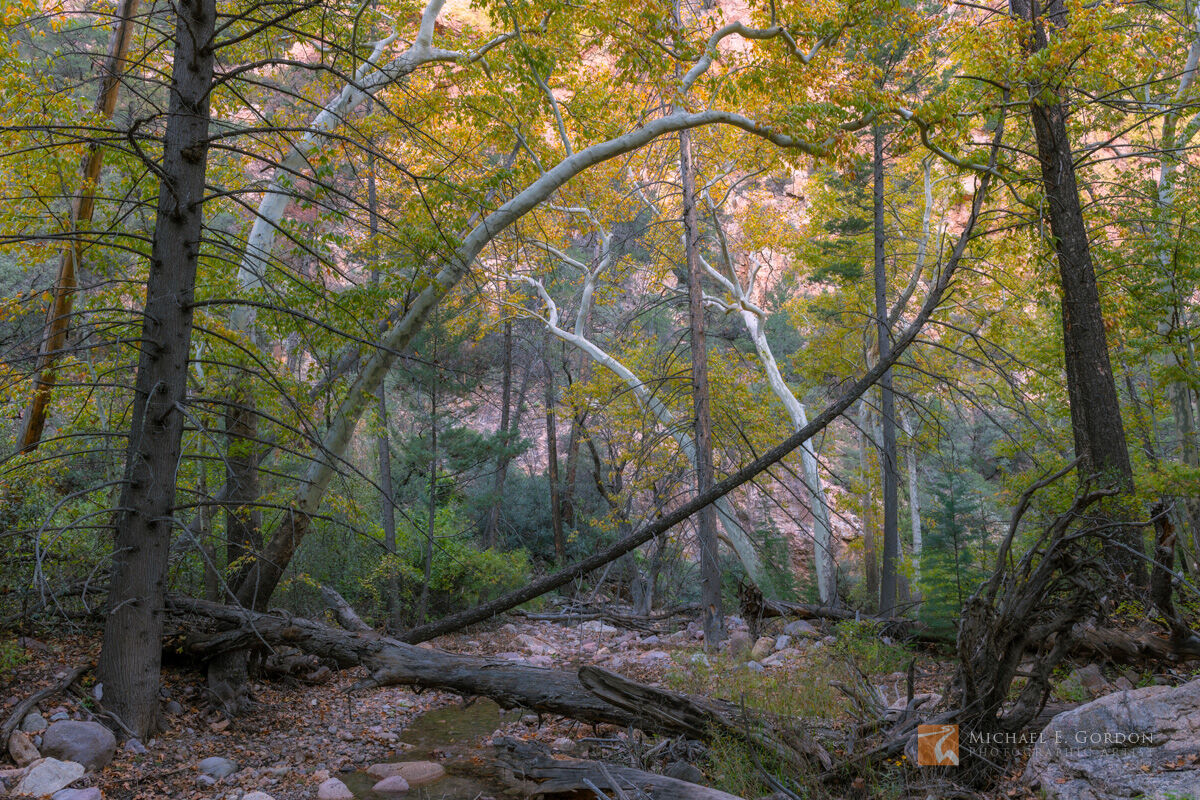
I loved everything about it: the pink rhyolite canyon walls; the background light squeaking through the thin forest canopy; the green/yellow/orange hues of Arizona Sycamores; the verdant understory; but most of all, those wildly arching pines and sycamores throughout the center of the frame.
It's a solid photograph, but it's too literal and it doesn't provide much for the viewer to consider. Postcard perfect. With a creek to boot. It could be better focused on what stopped me (that colorful, arching canopy). I suspect I was overwhelmed by the beauty and tried to contain all of it in one frame.
I meditated on the beauty of the place and my photographic intent, moving a number of feet in the process, refining my idea, making this frame 1.5 minutes later:
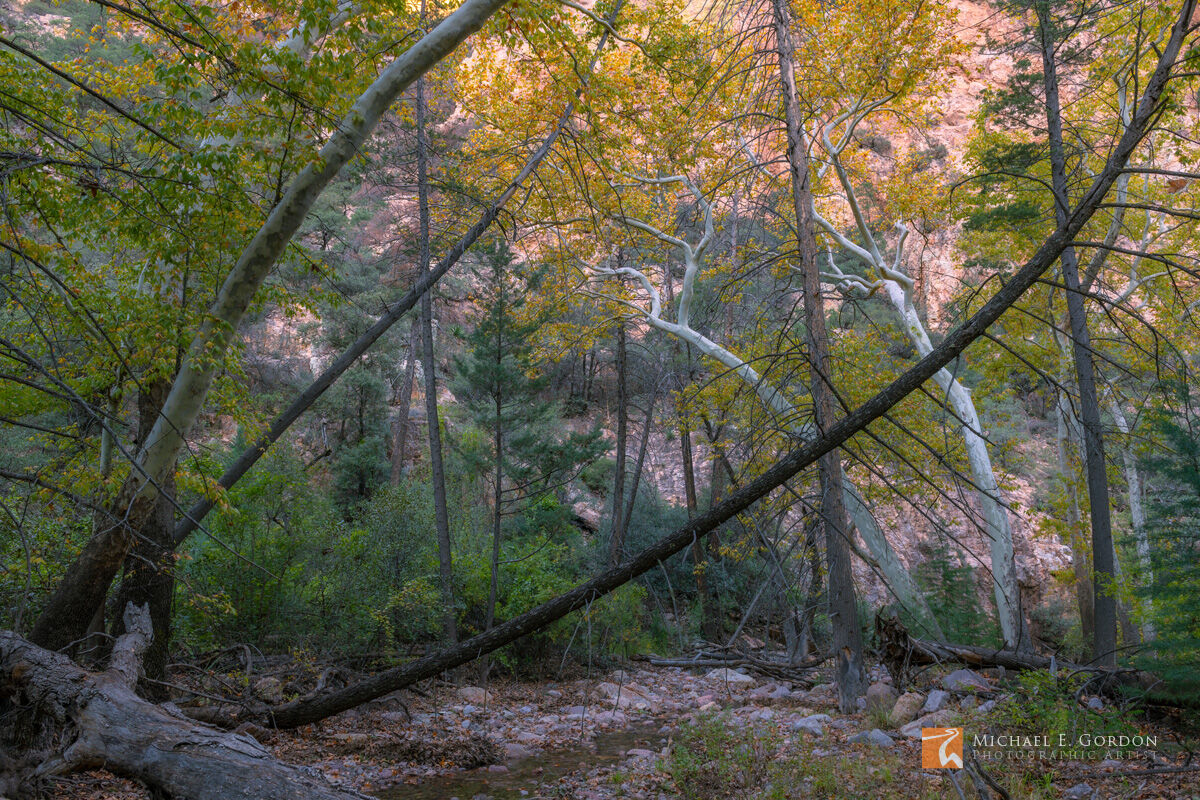
I wish I could tell you that my second frame was an improvement (that's how it is supposed to go), but it is not. By trying to eliminate much of the creek and felled tree (which in the first frame felt like visual obstacles to me), I undid everything beautiful about the arching canopy and rearranged the rhyolite wall in a less pleasing way. I also awkwardly stranded a piece of that felled tree in the lower left corner. Talk about visual obstacles.
I again meditated on the incredible beauty of the place, and my photographic intent, again moving a number of feet in the process, further refining the idea, making a final frame another 1.5 minutes later:
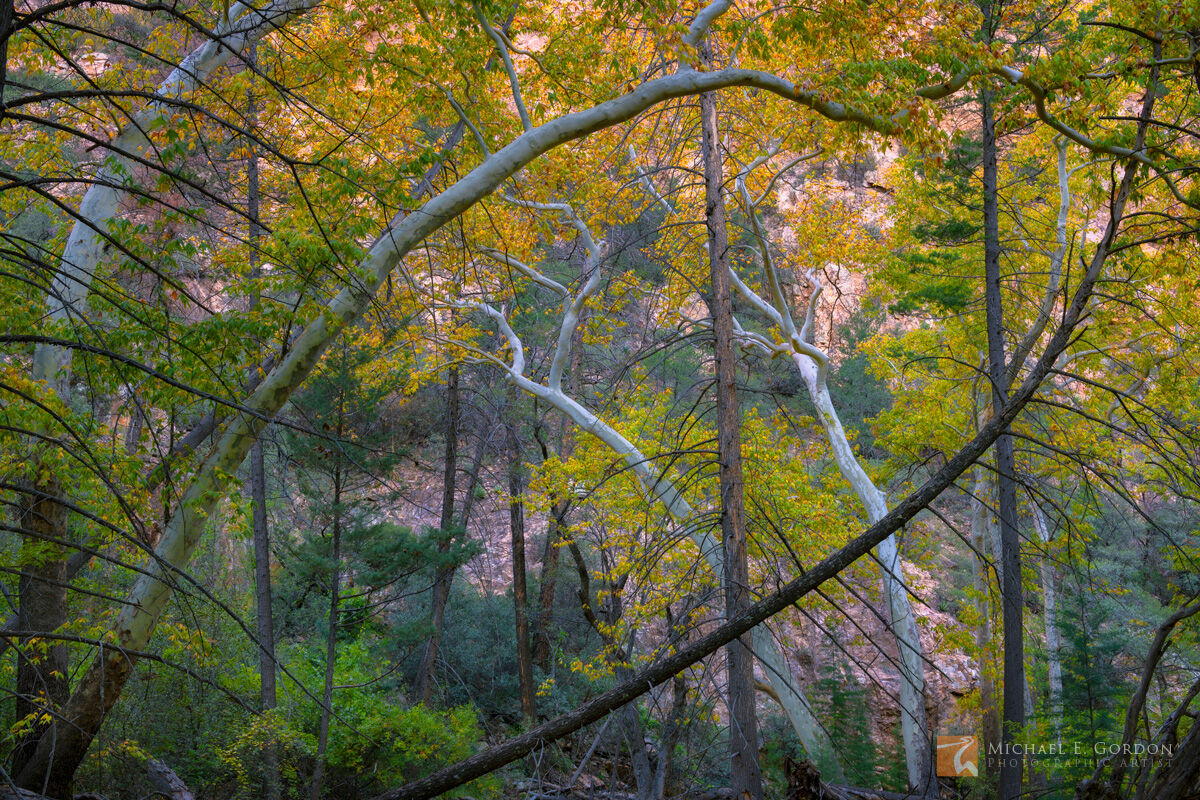
Everything I have written to this point is a useful way to explain a process one could follow in order to make potentially successful photographs. In reality, this is not at all how I work. Mostly due to intuition (the result of decades of commitment and regular practice) I make images on a visceral, gut level. I look, I feel, I respond, but I also have the benefit of modern digital technology from which to be able to make real-time evaluations (it is a fantastic time to be a photographer). Even after decades of experience, I don't assume my initial response is the best one. Sometimes my gut tells me something differently, sometimes the land seems to say "pssst, there' still more here."
So I keep going. Striving for a stronger image. Sometimes it's an exercise in flogging myself, so I pack it in and give up. Sometimes, it comes together perfectly in just a few minutes.
If it looks good, shoot it; if it looks better, shoot it again.
Galen Rowell